
What Happens to Plastic After It Leaves the Recycling Bin?
For many households, "recycling" ends the moment a plastic bottle or food container drops into the blue bin. In reality, that moment is just the beginning of a long, complex, and sometimes fragile journey. Understanding what happens next is essential if recycling is to be more than a feel-good ritual and instead become a genuinely effective tool for reducing waste, emissions, and plastic pollution.
This article follows plastic from your home to sorting plants, reprocessors, and global markets, explaining where it succeeds, where it fails, and what needs to change. It also looks at what individuals, communities, and businesses can do to make sure more of the plastic they touch actually gets a second life.
For keen readers who want broader context on waste and sustainable habits, related guides on sustainable living, plastic recycling, and waste offer deeper dives.
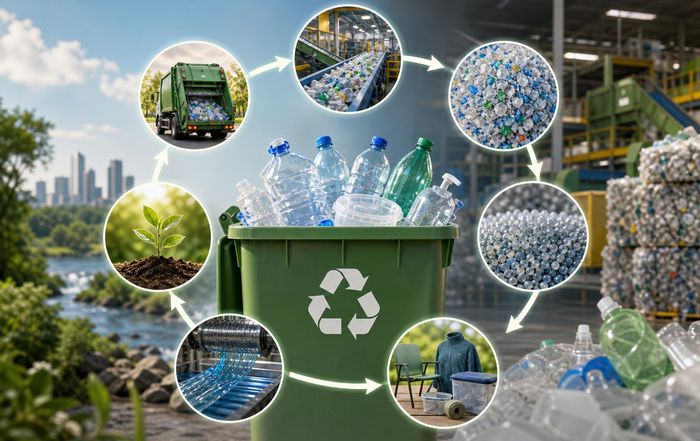
Step 1: Collection - From Your Curb to a Truck
Once plastic is placed in a recycling bin, it typically joins one of three collection systems: mixed recyclables (single-stream), separated recyclables (multi-stream), or deposit/return schemes for bottles and cans. In single-stream systems common across North America and parts of Europe, all recyclables go into one bin, making participation easier but increasing contamination. Multi-stream systems, where residents separate paper, glass, and plastics, often produce cleaner material but require more effort and logistics. Deposit schemes, used widely in countries like Germany and some U.S. states, can achieve very high return rates for beverage containers because consumers receive a refund.
Collection is usually run by municipal authorities or contracted waste companies that operate fleets of trucks. These trucks compact materials to reduce volume, which is efficient for transport but can damage some items and mix in contaminants. At this stage, plastics are still mixed with metals, paper, glass, food residues, and non-recyclable trash. The quality of what is collected-how clean, how well sorted-strongly influences what can be recovered later. Municipalities that invest in public education and clear labeling tend to send cleaner streams to sorting facilities, improving recycling outcomes and reducing costs passed on to taxpayers.
The climate impact of this collection step is not trivial, but studies by organizations such as the U.S. Environmental Protection Agency and the European Environment Agency consistently find that, for most commonly recycled materials, the emissions saved by recycling far outweigh the emissions from collection and transport. Clean, well-sorted material at this early stage is one of the most powerful levers for making the whole system more efficient and climate-friendly.
Step 2: Sorting at a Materials Recovery Facility (MRF)
After collection, recyclables are delivered to a materials recovery facility (MRF). This is where the first major transformation happens: mixed material is turned into sorted bales that recycling companies might actually want to buy. Modern MRFs are complex industrial plants that combine manual labor with advanced sorting technologies.
The process usually begins with pre-sorting, where workers remove obvious contaminants like garden hoses, plastic bags, electronics, and items that can tangle machinery. Conveyor belts then move material through a series of screens and separators: rotating disc screens to separate cardboard and paper, magnets to pick out steel, eddy current separators for aluminum, and sometimes air jets to blow lighter materials into different streams. For plastics, near-infrared (NIR) optical sorters are increasingly common. These machines scan items as they pass, identify the type of plastic by its spectral signature, and use targeted air blasts to separate, for example, clear PET bottles from colored PET or from HDPE containers.
Despite these technologies, sorting remains imperfect. Black plastics can be invisible to many optical scanners because of the carbon black pigments that absorb infrared light. Labels, multilayer packaging, and look-alike plastics confuse both machines and people. Food residues and liquids spoil paper and cardboard and can also affect plastics. Contamination-non-recyclable items, dirty containers, or mixed materials-can force MRFs to downgrade or discard entire loads. In some regions, contamination rates in household recycling can reach 20-25%, meaning a significant share of what residents think they are recycling ends up in landfill or incineration instead.
By the end of the MRF process, plastics are usually separated into categories such as PET (often coded #1), HDPE (#2), sometimes PP (#5), and a mixed-plastics stream. These are compressed into bales and sold as commodities. The prices they fetch on the market depend on global oil prices, demand from manufacturers, quality standards, and policy signals such as recycled content targets. This is where recycling intersects directly with the broader economy: if it is cheaper and easier for manufacturers to buy virgin plastic than to use recycled feedstock, many bales will struggle to find a home.
Step 3: Reprocessing - Cleaning, Shredding, and Melting
After leaving the MRF, plastic bales go to specialized reprocessing plants, which may be local or several countries away. Trade in plastic scrap is global: for years, large volumes from the U.S., U.K., and the EU were exported to Asia. Following China's "National Sword" policy and similar restrictions in other countries, many importing nations tightened quality standards or banned certain plastic waste imports altogether. This forced exporting countries to improve domestic sorting or find new destinations, sometimes with weaker environmental controls. International bodies such as the Basel Convention (administered by the UN Environment Programme) have begun to regulate this trade more strictly, but oversight remains uneven.
At a reprocessing plant, bales are broken open, and plastics undergo several steps:
First, they are sorted again, often more finely, to remove remaining contaminants and separate colors or specific product types. Then they are washed-sometimes in hot water with detergents-to remove labels, adhesives, and food residues. Cleanliness here is critical: residual contamination can cause discoloration, odors, or structural weaknesses in the final recycled material, limiting its uses.
Next, the plastic is mechanically shredded into flakes or ground into smaller pieces. These flakes may be passed through additional separation steps, such as float-sink tanks, where some plastics float and others sink depending on density. The goal is to achieve a consistent, well-characterized stream. Finally, the clean flakes are melted and extruded through dies to form strands, which are then chopped into uniform pellets. These recycled plastic pellets are the primary product that manufacturers buy to make new goods.
This mechanical recycling process works reasonably well for relatively simple, high-volume plastics like clear PET bottles and natural HDPE containers. It is much more challenging for flexible films, multi-layer packaging (like chip bags or juice cartons with plastic-metal-paper layers), and heavily colored or filled plastics. In many countries, these difficult materials are either downcycled into lower-value products, burned for energy, or landfilled. The Ellen MacArthur Foundation and other circular economy advocates argue that redesigning packaging to be compatible with mechanical recycling is one of the most urgent tasks for industry and regulators.
Step 4: From Pellets to New Products
Once plastic has been turned into pellets, it re-enters the manufacturing system, where it competes directly with virgin resin produced by the petrochemical industry. Manufacturers blend recycled and virgin pellets in different proportions depending on technical specifications, safety requirements, and price. For some applications, particularly those with direct food contact, regulators such as the U.S. Food and Drug Administration and the European Food Safety Authority set strict standards for recycled content to ensure no harmful contaminants migrate into food.
Recycled PET (rPET) is commonly used in textiles (for fleece, sportswear, carpets), strapping, and non-food packaging. In some jurisdictions, advances in decontamination and stricter input controls allow rPET to be used again in new beverage bottles, enabling a "bottle-to-bottle" loop. Recycled HDPE is often used in non-food containers, pipes, plastic lumber, and outdoor furniture. Recycled PP can become automotive parts, storage boxes, and some types of packaging. However, many recycled plastics end up in applications where quality demands are lower and where further recycling at end-of-life is unlikely-this is classic downcycling.
Every time plastic is mechanically recycled, the polymer chains can degrade, reducing strength and performance. Additives and colorants from previous uses remain mixed in. For this reason, most plastics can only go through a limited number of mechanical recycling cycles before they are no longer useful and must be disposed of. This is a fundamental difference from materials like metals or glass, which can theoretically be recycled indefinitely with minimal quality loss. It is also why advocates of sustainable living emphasize reducing and reusing plastic before relying on recycling.
What About "Advanced" or Chemical Recycling?
In recent years, "chemical recycling" (sometimes called advanced or molecular recycling) has attracted significant investment and debate. Rather than simply shredding and remelting plastics, these technologies aim to break polymers back down into their chemical building blocks, which can then be used to make new plastics or other chemicals. Approaches include pyrolysis (heating plastics in the absence of oxygen to create an oil-like product), gasification (turning waste into syngas), and depolymerization (chemically breaking specific plastics like PET or polystyrene back into monomers).
Proponents-including many major petrochemical and consumer goods companies-argue that chemical recycling could handle mixed, contaminated, or composite plastics that are unsuitable for mechanical recycling. They claim it can produce outputs nearly indistinguishable from virgin resin, theoretically allowing infinite recycling loops. Organizations such as the American Chemistry Council and industry consortia highlight pilot plants and early commercial facilities as evidence of progress.
However, independent researchers, environmental groups like Greenpeace, and some academic institutions such as University College London and ETH Zurich have raised serious questions. Many projects have struggled to scale, faced high energy demands, or ended up producing fuels that are burned rather than new plastics, making them more akin to energy recovery than true recycling. Life-cycle assessments from bodies like the European Commission's Joint Research Centre suggest that environmental benefits depend heavily on plant design, energy sources, and what products are actually made.
Regulators are still deciding how to classify and regulate these technologies. In some jurisdictions, outputs from chemical recycling can be counted as "recycled content" under certain accounting rules, even when only a fraction of the feedstock becomes new plastic. Critics argue this risks overstating recycling performance and distracting from simpler solutions like reducing unnecessary packaging and improving conventional recycling. For now, chemical recycling remains a small and contested part of the overall plastic waste system, not a proven cure-all.
When Recycling Fails: Landfills, Incineration, and Leakage
Not all plastic placed in a recycling bin completes the journey to become a new product. At multiple points-collection, sorting, reprocessing-material can be rejected. Some of this rejected plastic is contaminated or technically non-recyclable; some is simply uneconomic to process under current market conditions. So where does it go?
In many countries, the default destination is landfill. Modern engineered landfills with liners and gas capture are safer than uncontrolled dumps, but they still represent a long-term storage problem. Plastics do not biodegrade in any meaningful human timescale; instead, they slowly fragment into microplastics, which can migrate into leachate and surrounding environments. Research summarized by the United Nations Environment Programme indicates that land-based mismanaged plastic waste is a major source of marine plastic pollution, especially where open dumping is common.
Another major destination is incineration, sometimes with energy recovery ("waste-to-energy"). Facilities of this kind are widespread in parts of Europe and East Asia and are increasingly used in other regions. Advocates, including some municipal authorities and waste companies, argue that controlled incineration with modern filters reduces landfill use and generates electricity or heat. However, burning plastic-essentially a fossil fuel-releases significant greenhouse gases, and concerns remain about air pollutants, toxic ash, and the risk of locking cities into long-term contracts that depend on a steady supply of waste. Bodies like the World Health Organization and European Environment Agency emphasize the need for strict emission controls and careful health monitoring.
A third, less visible failure mode is leakage into the environment. This can happen when plastic waste is dumped illegally, escapes from landfills, falls from trucks, or is exported to countries with weaker waste management systems where it ends up in open dumps or waterways. Studies compiled by The Ocean Conservancy and The Pew Charitable Trusts estimate that millions of tonnes of plastic enter the oceans each year. Some of that plastic was once in a recycling bin in another country. This underscores why simply "exporting the problem" is not a sustainable strategy.
Why So Much Plastic Still Isn't Recycled
Globally, only a modest fraction of plastic waste is recycled in practice. Estimates from organizations such as the OECD suggest that less than 10% of all plastic ever produced has been recycled at least once. Even in regions with advanced infrastructure, recycling rates vary widely between plastic types and product categories. Several structural problems explain this gap between aspiration and reality.
First, design and material complexity make many items inherently difficult or impossible to recycle. Multilayer packaging that combines plastic with aluminum or paper, hard-to-separate mixed polymers, dark pigments, and complex shapes all interfere with sorting and processing. Designing packaging for recyclability-sometimes called "design for circularity"-is still not standard practice across the industry, though initiatives like the Ellen MacArthur Foundation's New Plastics Economy are pushing change.
Second, economics often work against recycling. Virgin plastic is made from fossil fuels, and its price is tied to oil and gas markets. When fossil fuel prices are low or when petrochemical capacity is abundant, virgin resin can be cheaper and more consistent than recycled alternatives. Without policy interventions such as recycled content mandates, landfill taxes, extended producer responsibility (EPR) schemes, or deposit systems, many recycling operations struggle to compete.
Third, infrastructure and governance gaps are significant, particularly in low- and middle-income countries but also in under-resourced communities in wealthier nations. Collection systems may be incomplete; informal waste pickers may shoulder much of the burden without legal protection or fair pay; and oversight of exports, landfills, and incinerators can be weak. International frameworks like the Basel Convention and initiatives under the UN Environment Assembly to negotiate a global plastics treaty are attempts to address some of these systemic issues.
Finally, public confusion plays a role. Labels can be misleading-symbols that look like recycling logos may only indicate the type of plastic, not that the item is accepted in local programs. Wish-cycling (placing non-recyclable items in the bin in the hope they can be recycled) increases contamination and costs. Clear communication from municipalities, brands, and educators is essential, and this is where more environmental awareness and education efforts intersect directly with daily household habits.
What Individuals Can Do to Improve Plastic's Journey
While systemic change in policy, product design, and industry practice is crucial, individual choices still matter, especially when scaled across millions of households and consumers. The most effective actions usually follow the familiar but often under-applied hierarchy: reduce, reuse, then recycle.
Reducing means avoiding unnecessary plastic in the first place: choosing products with minimal or refillable packaging, buying in bulk where it genuinely cuts waste, and favoring durable items over disposables. Many cities and companies are experimenting with refill schemes, package-free grocery sections, and reuse models; these can dramatically reduce the volume of plastic entering the waste stream. For people interested in practical day-to-day changes, our lifestyle and personal well-being sections explore how sustainable choices can align with convenience and health.
Reusing extends the life of items already produced: repurposing containers, supporting repair and refill services, and participating in sharing or rental models for items that are rarely used. While not all plastic packaging is suitable for long-term reuse (for safety or durability reasons), shifting demand toward products designed for repeated use sends a powerful signal to brands and retailers.
Recycling, when it is the only viable option, works best when residents follow local guidance precisely. This includes rinsing containers lightly (to remove food, not to achieve laboratory-level cleanliness), removing obvious non-plastic components when requested, and avoiding placing non-accepted items-like plastic bags, electronics, or "compostable" plastics-into the recycling bin. Many municipal websites and national bodies such as the U.S. EPA, Environment and Climate Change Canada, and Germany's Umweltbundesamt provide clear, region-specific instructions. Checking these regularly matters because accepted materials and technologies change over time.
Consumers can also use their influence as voters and customers. Supporting policies that require producers to take responsibility for the end-of-life of their products, encouraging retailers to offer refill and return options, and favoring brands that publish credible, independently verified data on recycled content and packaging design all help shift the system. For those engaged in sustainable business, integrating circular design principles, transparent reporting, and collaboration along the supply chain is increasingly seen not only as a reputational issue but as a strategic one.
Rethinking Plastic's Place in a Sustainable Future
Following a single plastic bottle from a kitchen bin to a new product reveals both the strengths and the fragilities of current recycling systems. When everything works-clean collection, efficient sorting, high-quality reprocessing, and robust demand-plastic can indeed be turned into new materials, saving energy and reducing the need for virgin fossil resources. But the reality is that many items never complete this loop. They are downcycled, burned, buried, or lost to the environment.
For a world that aspires to more sustainable, circular resource use, this is a clear signal that recycling alone cannot carry the burden of fixing the plastics problem. It remains an important tool, but it must be paired with upstream changes: designing products and packaging for recyclability and reuse, capping unnecessary production of short-lived plastics, investing in fair and robust waste systems worldwide, and aligning economic incentives with environmental goals.
Understanding what happens after the recycling bin is a first step toward more honest conversations about plastic. It replaces the comforting myth of a perfect loop with a more nuanced picture-one that invites individuals, communities, businesses, and policymakers to share responsibility for reshaping the system. For friendly and kind readers interested in how these changes connect to wider issues such as climate change, innovation, and technology, exploring these themes together can offer a clearer sense of where personal choices meet structural transformation, and how small actions at the bin can support bigger shifts in how the world uses-and reuses-its resources.
